Why Heavy-Duty Tarps Are Used for Demanding Applications
Why Heavy-Duty Tarps Are Used for Demanding Applications
Heavy-duty tarps are used when a regular tarp is simply not enough. In transportation, agriculture, construction, warehousing, and outdoor storage, the covering material may need to deal with rain, sunlight, wind, abrasion, repeated handling, and heavy loads.
This is where the material construction starts to matter. A heavy-duty tarp is usually made with a stronger base fabric and a thicker coating, giving it better strength and durability than lighter tarps.
1. High Strength and Tear Resistance
One of the main reasons to choose a heavy-duty tarp is its strength.
Heavy-duty PVC tarps commonly use high-tenacity polyester fabric with a PVC coating. Different fabric densities, yarn sizes, and coating thicknesses can be used depending on the application.
For truck covers, cargo protection, construction materials, and outdoor equipment, the tarp may be pulled, folded, dragged, or exposed to wind during use. A stronger base fabric helps the tarp handle these conditions and reduces the risk of tearing.
The edge is also important. Reinforced hems, welded seams, ropes, and metal eyelets help distribute tension when the tarp is fixed in place. For large covers, good edge reinforcement can make a noticeable difference in actual use.
2. Waterproofing and Weather Resistance
For outdoor use, keeping water out is often the first requirement.
PVC-coated tarps have a relatively dense surface that provides good waterproofing. Depending on the material and formulation, the tarp can also be made with UV resistance, mildew resistance, flame retardancy, or other properties.
This is particularly useful when goods or equipment need to stay outside for weeks or months rather than just during a short period of bad weather.
Of course, actual outdoor performance depends on the material specification and local conditions. Sunlight, temperature, humidity, wind, and how the tarp is installed can all affect its service life.
3. Durability for Repeated Use
A heavy-duty tarp is not simply a thicker tarp.
The base fabric, PVC formulation, coating thickness, surface finish, and finishing method all affect how the material performs.
For example, a tarp that is going to be rolled and unrolled every day needs different characteristics from one that will simply remain over a piece of equipment for several months.
UV stabilizers and suitable PVC formulations can help the material maintain its flexibility and strength during outdoor use. For colder environments, low-temperature flexibility can also be an important consideration.
4. Where Are Heavy-Duty Tarps Used?
Transportation
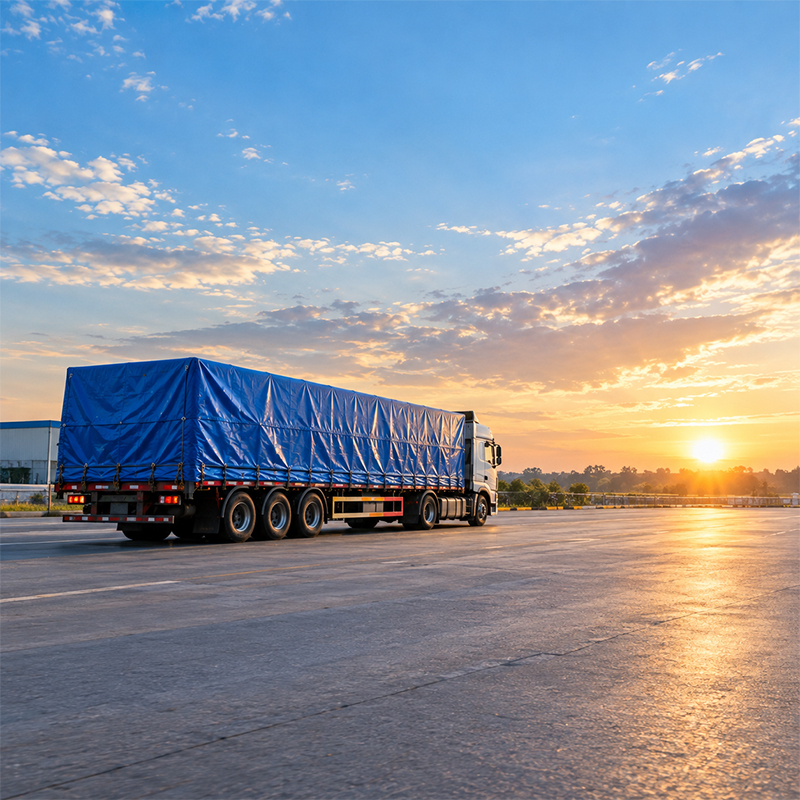
Heavy-duty tarps are commonly used for trucks, trailers, containers, and other cargo applications.
They protect cargo from rain, snow, dust, sunlight, and road conditions during transportation. For long-distance transport, the quality of the tarp and the way it is secured can both affect the protection it provides.
Agriculture
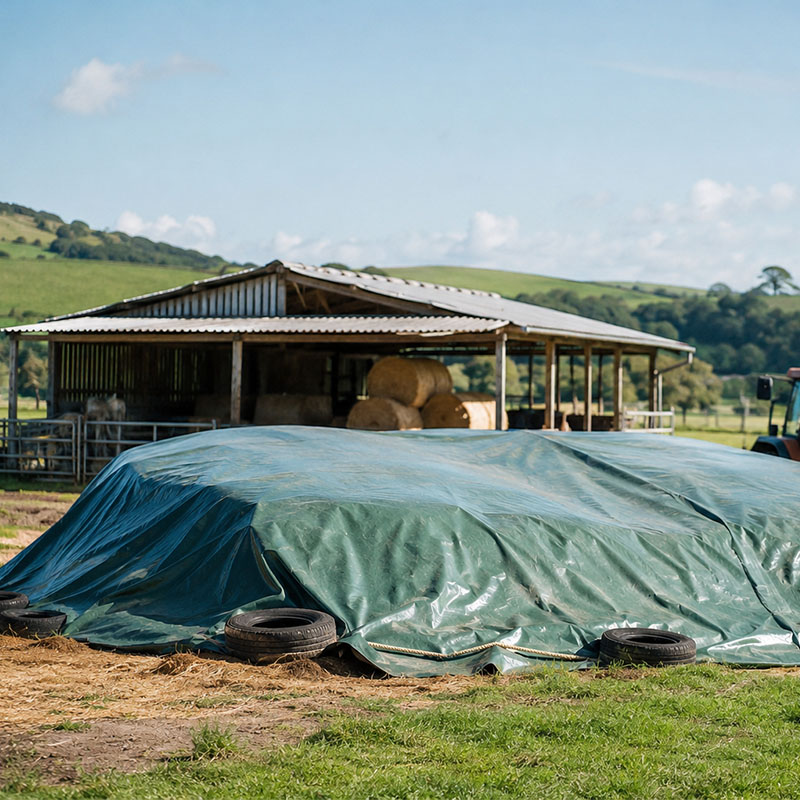
Agricultural applications include grain covers, equipment covers, temporary storage, and other outdoor uses.
For grain and other moisture-sensitive materials, waterproofing is particularly important. Depending on the storage method, the tarp may also need good tear resistance and UV resistance.
Construction
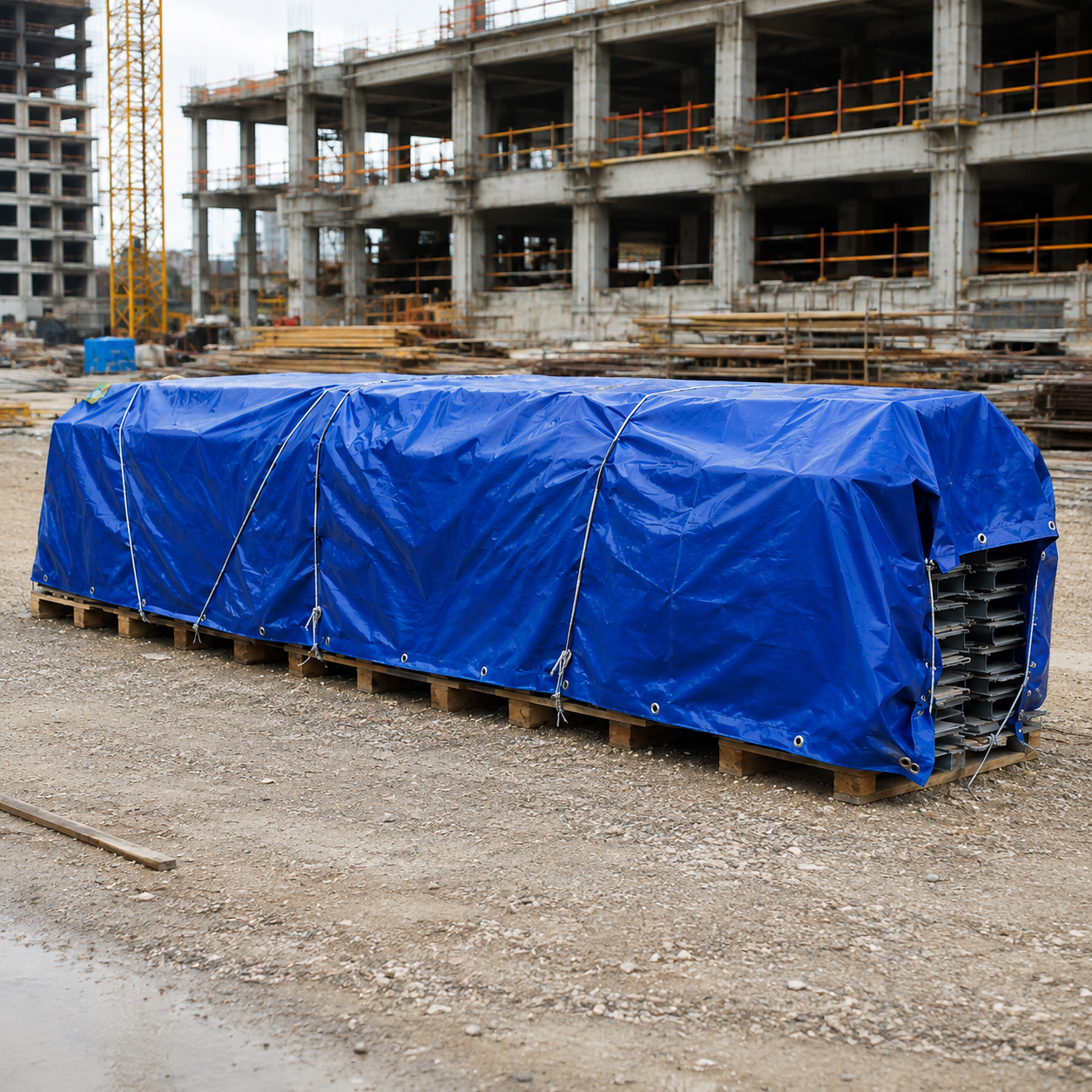
Construction sites often have materials and equipment that need temporary protection from weather.
Heavy-duty tarps can be used to cover building materials, machinery, work areas, and temporary structures. They are also relatively easy to remove and reuse when the project moves to another stage.
Industrial and Warehouse Use
In industrial environments, tarps can be used to cover machinery, raw materials, finished products, and equipment stored outdoors.
Some applications also use PVC tarps as temporary partitions or industrial curtains. In these cases, properties such as flame retardancy or chemical resistance may be required.
Emergency and Temporary Protection
Heavy-duty tarps are also useful when a quick covering solution is needed.
They can be used for temporary shelters, emergency storage, disaster response, and other situations where materials or equipment need protection without building a permanent structure.
5. How to Choose a Heavy-Duty Tarp
There is no single specification that works for every application.
When choosing a tarp, it is worth looking at several things:
Fabric weight and thickness
A heavier tarp usually provides more material strength, but it is also harder to handle. The right balance depends on the application.
Base fabric
The polyester base fabric has a direct effect on tensile and tear strength. Higher-strength fabric is normally used for more demanding applications.
PVC coating
Coating thickness and formulation affect waterproofing, flexibility, weather resistance, and surface performance.
Size and finishing
Large tarps need proper edge reinforcement. The choice of hems, eyelets, ropes, welded seams, and reinforcement should match the way the tarp will be installed and used.
Special requirements
Some applications may require flame retardancy, UV resistance, anti-static properties, low-temperature flexibility, or other customized features.
Heavy-Duty Tarp vs. Standard Tarp
The difference between a heavy-duty tarp and a standard tarp is mainly in the overall construction and intended use.
A lightweight tarp can work well for short-term or light-duty coverage. There is no reason to use a very heavy material if the application does not require it.
A heavy-duty tarp becomes more useful when the material will be exposed to frequent handling, abrasion, strong weather, heavy cargo, or long-term outdoor conditions.
The heavier material usually costs more and can be more difficult to handle, but in the right application, the longer service life and better protection can make the additional cost worthwhile.
Heavy-duty tarps are mainly about matching the material to the working conditions.
For a short-term cover, a lightweight tarp may be enough. For truck transportation, outdoor storage, agriculture, construction, or industrial protection, a stronger and more durable tarp may be a better fit.
The important thing is not simply choosing the heaviest tarp available. Fabric strength, thickness, coating, finishing, installation, and actual working conditions all need to be considered together.
PVC Knife Coated Tarpaulin vs. PVC Laminated Tarpaulin: What's the Difference?
Related Article