
About Tarpaulin
Welcome to PVC Knife-Coated Fabric Production Process
PVC Knife-coated Tarpaulin is a highly durable,tear-resistant and 100% waterproof fabric that defines high-performance PVC tarpaulin for the most demanding applications. Commonly used in demanding applications such as Transportation industry, aquaculture, membrane structure, fire protection industry, and outdoor covering, etc.
Introduction
Unlike laminated tarpaulins, knife-coated PVC tarpaulin is produced through a specialized coating process that applies liquid PVC paste directly onto a high-strength polyester base fabric using a precision knife blade. This advanced manufacturing technique ensures a thicker, more uniform coating layer and significantly improves durability.
Understanding the production steps of PVC knife-coated tarpaulin helps buyers, distributors, and manufacturers better evaluate product quality and performance. In this article, we will explore the complete manufacturing process—from raw material preparation to final quality inspection—and explain how each step contributes to producing high-quality industrial PVC tarpaulin.Below are the typical production steps:
1. Raw Material Preparation and Base Fabric Preparation
The quality of PVC tarpaulin begins with the selection of high-grade raw materials. Several key components work together to produce a strong, waterproof, and durable fabric.
Polyester Base Fabric
The base fabric serves as the structural backbone of the tarpaulin. It is typically made from high-tenacity polyester yarn that provides excellent tensile strength and tear resistance.
Common specifications include:
500D × 500D polyester yarn
840D × 840D polyester yarn
1000D × 1000D polyester yarn
1300D × 1300D polyester yarn
The fabric density (such as 18×18 or 20×20 threads per inch) determines the final strength and durability of the tarpaulin.
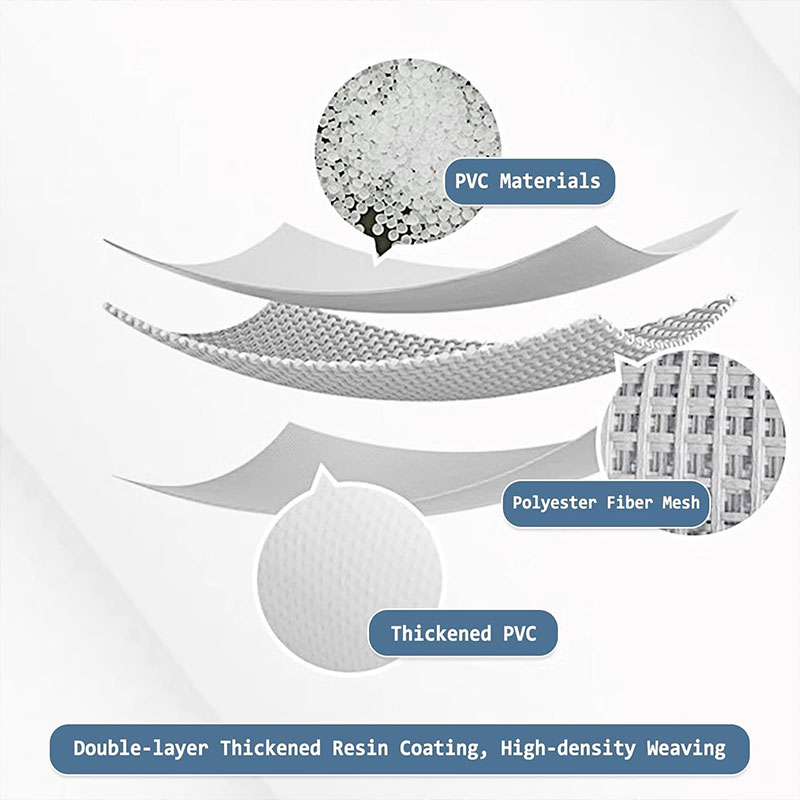
PVC Resin
PVC resin is the primary coating material. When heated and processed, it forms a flexible and waterproof layer that protects the fabric from moisture, UV radiation, and mechanical wear.
Plasticizers
Plasticizers are added to improve flexibility and softness. Without plasticizers, PVC would become brittle, especially in cold environments. Stabilizers and Functional Additives Additional additives may include: UV stabilizers to prevent sun damage Flame retardants for fire-resistant tarpaulin Anti-fungal agents to prevent mold growth Anti-static agents for specialized industrial use.
Stabilizers and Functional Additives
• Additional additives may include:
• UV stabilizers to prevent sun damage
• Flame retardants for fire-resistant tarpaulin
• Anti-fungal agents to prevent mold growth
• Anti-static agents for specialized industrial use
Pigments
Color pigments are used to produce customized colors such as blue, green, gray, orange, or custom colors.

2. Knife-Coating Process
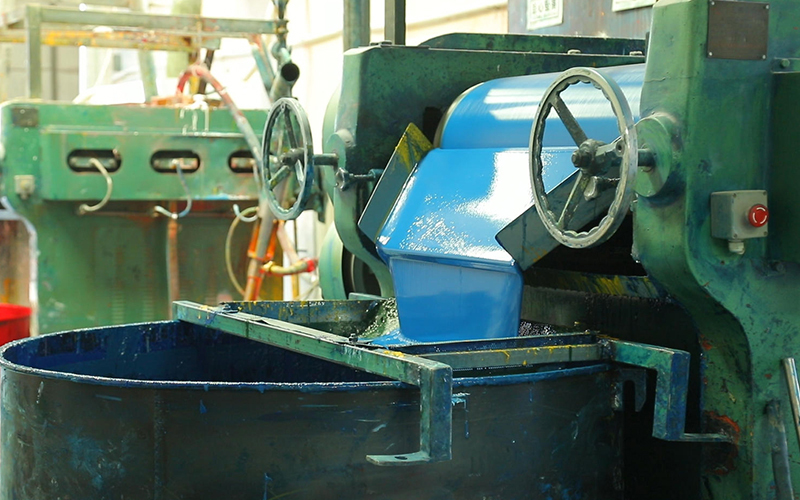
The knife-coating process is the most important step in PVC tarpaulin manufacturing. It determines the thickness, smoothness, and performance of the final coating.
Knife-Over-Roll Technology
In this process, a precision knife blade spreads PVC paste evenly across the fabric surface.
The distance between the knife blade and the fabric controls the thickness of the coating layer. This method allows manufacturers to produce tarpaulin with precise coating thickness and consistent quality.
First Layer Coating
The first coating layer is applied to the polyester fabric surface. This layer penetrates slightly into the fibers and forms a strong bond with the base material.
Vertical Oven Drying
After coating, the fabric enters a vertical drying oven. High temperatures cause the PVC paste to undergo a gelation process, transforming it into a solid, flexible coating.
Typical oven temperatures range between 160°C and 200°C, depending on the formulation.
Traction and Tension Control
A traction system pulls the fabric through the coating line at a controlled speed. Maintaining proper tension ensures the coating layer remains smooth and uniform.
Cooling Stage
Once the PVC layer is cured, the coated fabric passes through a cooling section. Cooling stabilizes the coating structure and prepares the material for additional processing.
3. Backside Coating and Double-Sided Treatment
For heavy-duty applications, PVC tarpaulin usually receives coating on both sides of the fabric.
The backside of the fabric is coated with another layer of PVC paste. Double-sided coating enhances waterproof performance and improves durability.
After the second coating layer is applied, the fabric passes through another high-temperature oven to cure the PVC.
Calendering rollers compress the coating layer to achieve the desired thickness and surface finish. Manufacturers can produce either matte or glossy tarpaulin surfaces depending on customer requirements.
Back Coating
Heat Curing
Calendering and Gloss Adjustment
Core Control Points of the Phase
PVC Paste Viscosity: Maintain at 5000-8000mPa·s to ensure smooth coating without excessive penetration; Oven Temperature Uniformity: The temperature fluctuation in each section is ≤±5℃ to avoid incomplete local plasticization; Base Fabric Tension: Control at 50-80N/m throughout the process to prevent stretching deformation of the base fabric and avoid affecting the uniformity of the coating thickness.
4. Final Processing and Finishing
After coating and curing, the PVC tarpaulin undergoes several finishing processes to improve dimensional stability and appearance.
① Width Stretching and Stabilization
The coated fabric passes through a stretching or tentering machine. This equipment stabilizes the fabric width and ensures consistent dimensions.
② Edge Trimming
Automatic cutting machines trim the edges of the fabric to remove uneven sections and ensure consistent roll width.
③ Rolling and Packaging
The finished tarpaulin is rolled into large industrial rolls and packaged for storage or shipment.
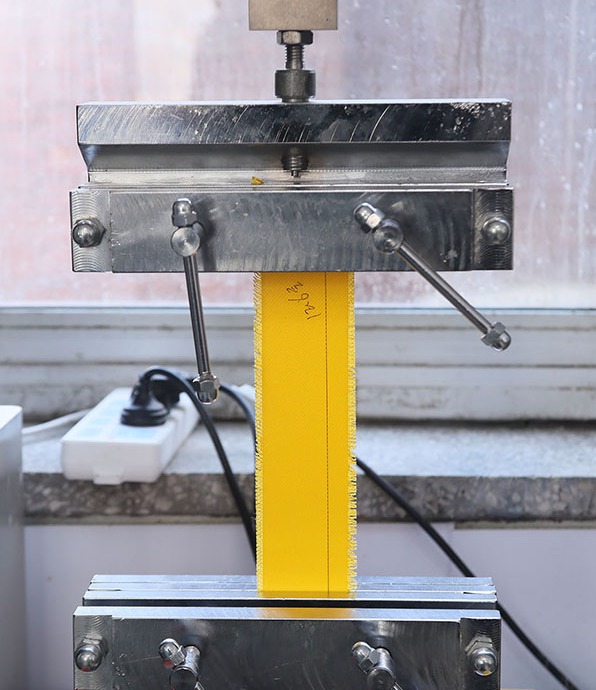
5. Quality Control in PVC Tarpaulin Manufacturing

Strict quality control procedures are essential to ensure the final product meets industry standards.


6. Advantages of PVC Knife-Coated Tarpaulin
Compared with laminated tarpaulin materials, knife-coated PVC tarpaulin offers several advantages.
Superior Strength
The high-tenacity polyester base fabric combined with thick PVC coating provides excellent tensile and tear strength.
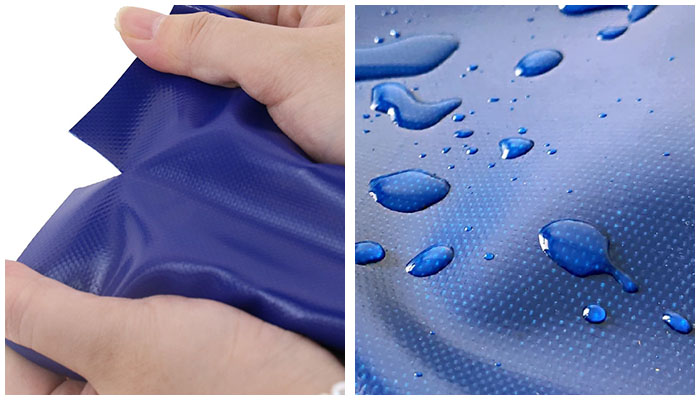
Outstanding Waterproof Performance
The dense PVC coating forms a complete waterproof barrier. Long Service LifeIndustrial-grade knife-coated tarpaulin can last 8–10 years under proper conditions.
Excellent Weather Resistance
UV stabilizers and additives help the material withstand harsh outdoor environments.
Heat Welding Capability
PVC tarpaulin can be easily welded using hot air or high-frequency welding machines.
7. Applications of PVC Knife-Coated Tarpaulin
Due to its durability and versatility, PVC knife-coated tarpaulin is widely used in many industries. Common applications include:
APPLICATION
Its high strength and waterproof properties make it an essential material for heavy-duty outdoor protection.
Truck Covers
Tent
Inflatable
Water Tank
Architectural Membrane Structures
Frequently Asked Questions
For more questions please
contact us

+86 15373413061

jessie@jz-coatedfabrics.com

Xiguan Town, Gaocheng District, Shijiazhuang, Hebei, China