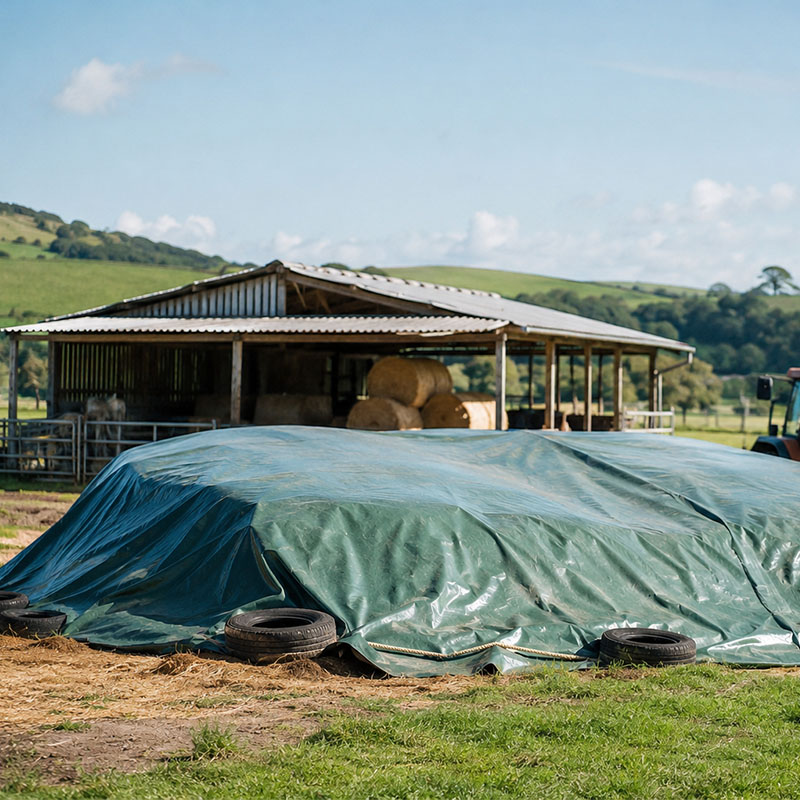
How to Choose PVC Tarp Rolls: GSM, Thickness & Applications
What Should You Consider When Choosing PVC Tarp Rolls?
PVC tarp rolls are widely used for truck covers, industrial protection, agricultural covering, outdoor shelters, inflatable products, construction enclosures, and many other demanding applications. Compared with lightweight PE tarps, PVC coated tarpaulin offers better waterproofing, stronger tear resistance, longer outdoor service life, and better custom fabrication possibilities.
However, not every PVC tarp roll is the same. A truck cover, an industrial equipment cover, a pool cover, and an inflatable fabric may all use PVC-coated material, but they require different thicknesses, base fabrics, coating formulas, surface treatments, and finishing methods.
For B2B buyers, the right question is not simply “What GSM should I buy ?” or “Which thickness is the strongest?” The better question is:
What will this tarp roll be used for, and what kind of working conditions must it handle?
This guide explains how to choose PVC tarp rolls in a practical way, helping you match material performance with real application needs.
1. Start with the Application, Not Only the Thickness
Many buyers begin by comparing thickness or price. This can lead to the wrong choice. A thicker tarp is usually stronger, but it may also be heavier, harder to fold, more expensive to ship, and more difficult to handle during installation.
Before choosing a specification, confirm these basic points:
• Will the tarp be used indoors or outdoors?
• Will it face long-term sunlight, rain, wind, snow, or dust?
• Will it be pulled, folded, dragged, or tensioned frequently?
• Will it touch rough surfaces, sharp edges, oil, chemicals, or fertilizers?
• Does it need flame retardant, anti-mildew, anti-static, or cold-resistant treatment?
• Will you buy raw rolls for further processing or finished tarps with hems, eyelets, and welded seams?
Once the application is clear, GSM and thickness become much easier to choose.
2. Match PVC Tarp Rolls with Different Application Scenarios
Different industries require different material performance. The table below gives a practical reference for common PVC tarpaulin roll applications.
| Application | Main Requirements | Recommended Material Direction |
|---|---|---|
| Truck and trailer covers | Wind resistance, abrasion resistance, waterproofing, UV resistance | 500–900gsm, high-strength polyester base fabric, UV treatment, welded hems |
| Outdoor tents and temporary shelters | Waterproofing, flexibility, folding resistance, flame retardancy for public use | 600–850gsm, flexible PVC coating, UV resistance, mildew resistance, flame-retardant option |
| Industrial equipment covers | Puncture resistance, oil resistance, chemical resistance, long-term outdoor durability | 500–1000gsm, thicker coating, acrylic or PVDF surface treatment, flame-retardant option |
| Construction and scaffold covers | Weather protection, tear resistance, repeated handling | 500–900gsm, reinforced base fabric, UV resistance, welded or reinforced edges |
| Agricultural covers and water reservoirs | Waterproofing, mildew resistance, chemical resistance, heat-weldable seams | 500–900gsm, anti-mildew treatment, good welding performance, chemical-resistant formula if needed |
| Inflatable products | Airtightness, flexibility, welding strength, safety compliance | Specialized airtight PVC fabric, flexible coating, high-frequency weldability, low-temperature flexibility |
| Pool covers and liner-related uses | Waterproofing, cold resistance, dimensional stability, anti-fungal treatment | 550–1000gsm depending on use, lacquered surface, anti-mildew and cold-resistant options |
One important point: standard opaque PVC tarpaulin is not suitable when high light transmission is required. If the application is a greenhouse cover, buyers should ask for clear PVC film or transparent PVC tarpaulin, not ordinary colored knife-coated tarpaulin.
3. Understand GSM and Thickness Correctly
GSM means grams per square meter. It shows the weight of the fabric per square meter and is one of the most common ways to compare tarp grades.
In general:
| GSM Range | Typical Use |
|---|---|
| 350–500gsm | Lightweight covers, advertising covers, short-term protection |
| 500–850gsm | Medium-duty tents, equipment covers, agricultural covers, standard outdoor protection |
| 650–900gsm | Heavy-duty truck tarps, industrial covers, construction protection |
| 900gsm+ | Extreme-duty covers, mining, oilfield protection, long-term outdoor structures |
Thickness is usually measured in millimeters. For PVC tarp rolls, common thickness can range from about 0.35mm to more than 1.0mm depending on coating weight, base fabric, and application.
However, GSM and thickness should not be judged separately. Two materials with similar GSM may perform differently if their base fabric, coating adhesion, plasticizer quality, or surface treatment is different. For demanding applications, buyers should also check tensile strength, tear strength, coating adhesion, cold resistance, and UV aging performance.
4. Check the Base Fabric Structure
PVC tarpaulin is usually made with a polyester base fabric coated with PVC on one or both sides. The base fabric is the “skeleton” of the tarp. It strongly affects tensile strength, tear resistance, dimensional stability, and long-term performance under tension.
Common base fabric indicators include:
• Yarn denier, such as 500D, 1000D, or 1300D
• Thread density, such as 9×9, 18×18, 20×20, or higher
• Polyester strength and weaving quality
• Coating adhesion between the PVC layer and the fabric
For truck covers, industrial covers, and high-tension applications, stronger base fabric is more important than surface thickness alone. A material may look thick, but if the internal fabric is weak, it may tear easily from corners, edges, eyelets, or welded seams.
5. Choose the Right Coating Method
PVC tarp rolls are usually produced by lamination or coating processes. For long-term and heavy-duty applications, knife-coated PVC tarpaulin is often preferred because the coating can bond well with the polyester fabric and provide stronger durability.
Knife-Coated PVC Tarpaulin
Knife-coated PVC tarpaulin is suitable for applications that require stronger coating adhesion, better outdoor durability, and higher resistance to pulling, folding, and abrasion. It is commonly used for truck covers, industrial covers, large outdoor tarps, and heavy-duty protection.
Laminated PVC Tarpaulin
Laminated PVC tarpaulin can be a more cost-effective choice for medium-duty or short-term applications. It can still provide waterproofing and outdoor protection, but may not be the best option for very harsh environments or repeated high-stress use.
The best choice depends on your working conditions, target service life, and budget.
6. Evaluate Waterproofing, UV Resistance, and Weather Performance
PVC tarpaulin is known for good waterproof performance, but buyers should understand that waterproofing is not only about the fabric surface. In real use, water leakage often happens at seams, eyelets, stitching holes, damaged edges, or poorly welded joints.
For long-term outdoor use, consider the following:
Waterproof Performance
High-quality PVC coated tarpaulin should resist water penetration under rain and standing water conditions. For demanding projects, ask for hydrostatic pressure test data instead of relying only on a simple water-beading test.
If the tarp will be made into finished covers, heat welding or high-frequency welding is usually better for waterproof seams than ordinary stitching. If stitching is used, seam sealing or additional waterproof treatment may be needed.
UV Resistance
For outdoor covers exposed to sunlight, UV resistance is essential. Without proper UV stabilizers, PVC material may fade, become brittle, crack, or lose flexibility over time. Truck covers, outdoor storage covers, tents, and agricultural covers should all consider UV-resistant formulations.
Cold Resistance
In cold regions, low-temperature flexibility is important. If a tarp becomes too hard in winter, it may crack when folded, pulled, or installed. For markets with freezing temperatures, buyers should ask for cold-crack performance or low-temperature bending test data.
Flame Retardancy
Flame retardant treatment is not necessary for every tarp, but it is important for public tents, temporary structures, industrial safety covers, welding areas, construction enclosures, and event applications. Buyers should confirm the required standard according to the target market, such as DIN 4102 B1, NFPA 701, or EN-related fire classifications.
Do not simply write “flame retardant” in the inquiry. Always confirm which certificate or test standard is required.
7. Do Not Ignore Chemical, Oil, and Mildew Resistance
Some PVC tarp rolls are used in environments where ordinary waterproofing is not enough. For example:
• Agricultural covers may contact fertilizers, pesticides, mud, and moisture.
• Industrial covers may contact oil, grease, solvents, dust, or chemical fumes.
• Marine and outdoor storage covers may face high humidity and mildew risk.
• Pool covers and water storage applications may require anti-fungal and anti-aging treatment.
In these cases, ask the supplier whether the PVC formula and surface treatment are suitable for the working environment. Special additives may be required to improve oil resistance, mildew resistance, chemical resistance, or long-term outdoor stability.
8. Rolls or Finished Tarps: Choose Based on Your Business Model
PVC tarp rolls are often purchased by distributors, converters, fabricators, tent manufacturers, truck cover manufacturers, and industrial project suppliers. Buying rolls gives more flexibility for cutting, welding, printing, sewing, and custom fabrication.
When buying rolls, confirm:
• Roll width and roll length
• Total GSM and thickness tolerance
• Color and surface finish
• Glossy, matte, embossed, or lacquered surface
• Printable surface requirements
• Roll packing method
• MOQ and lead time
• Container loading quantity
• Whether the material is suitable for hot-air welding or high-frequency welding
If you need ready-to-use tarps, you should also confirm finished size, reinforced edges, eyelet spacing, corner patches, webbing, ropes, printing, and packaging.
9. Common Mistakes When Choosing PVC Tarp Rolls
Mistake 1: Choosing Only by Price
Low price may mean thinner coating, weaker base fabric, poor coating adhesion, fewer additives, or unstable weight tolerance. For temporary use, this may be acceptable. For truck covers, outdoor storage, and industrial use, early failure can cost more than the initial saving.
Mistake 2: Thinking Higher GSM Is Always Better
Higher GSM usually means better durability, but not always better usability. If the tarp needs to be moved, folded, or handled frequently, a very heavy material may become inconvenient and costly. The right choice should balance strength, weight, flexibility, and budget.
Mistake 3: Ignoring Seam and Edge Design
Many tarp failures start from edges, corners, eyelets, or seams. If the finished product will face strong wind or repeated pulling, reinforced hems, welded seams, webbing, corner patches, and proper eyelet spacing are just as important as the roll material itself.
Mistake 4: Treating All PVC Tarpaulin as the Same
PVC tarpaulin can vary in coating method, base fabric, plasticizer quality, UV additives, flame retardant formula, surface treatment, color stability, and welding performance. Always compare technical data, not just appearance.
Mistake 5: Using the Wrong Material for Light Transmission
Ordinary colored PVC tarpaulin blocks light. If the project needs greenhouse covering or transparent protection, choose clear PVC film or transparent PVC tarpaulin and ask for light transmission data.
10. What Technical Data Should Buyers Ask For?
For professional procurement, ask your supplier for more than a price quotation. A complete material evaluation should include:
• GSM and thickness
• Base fabric structure
• Tensile strength
• Tear strength
• Coating adhesion
• Temperature resistance
• UV resistance or aging test information
• Flame retardant standard if required
• Waterproof or hydrostatic pressure data
• Surface treatment details
• Roll width, roll length, and tolerance
• Welding and fabrication compatibility
• Sample availability before bulk order
For high-value projects, requesting a sample is strongly recommended. Test the sample under real use conditions: folding, pulling, welding, rubbing, outdoor exposure, and contact with expected working materials.
Conclusion: The Best PVC Tarp Roll Is the One That Fits the Job
Choosing PVC tarp rolls is not about selecting the thickest or cheapest material. It is about matching the material to the actual working conditions.
For light temporary covering, a medium-weight PVC tarpaulin may be enough. For truck covers, construction protection, industrial equipment covers, and harsh outdoor use, stronger base fabric, higher GSM, better coating adhesion, UV resistance, and reinforced finishing are more important. For special applications such as inflatable products, pool covers, fire-retardant tents, or chemical-resistant covers, customized PVC formulations may be required.
As a PVC coated fabric manufacturer, we can help buyers choose suitable PVC tarpaulin rolls based on application, thickness, GSM, color, surface treatment, roll width, and custom processing requirements. If you are not sure which specification is right for your project, share your application, target market, size, quantity, and working environment. Our team can recommend a practical material solution for your business.
FAQ About Choosing PVC Tarp Rolls
1. What GSM is best for PVC tarp rolls?
It depends on the application. 300–450gsm is suitable for lightweight or temporary covers. 500–700gsm is common for medium-duty covers, tents, and equipment protection. 750–900gsm is better for truck tarps, construction covers, and industrial use. 1000gsm or above is usually used for extreme-duty or long-term outdoor applications.
2. Is PVC tarpaulin waterproof?
Yes, PVC coated tarpaulin has excellent waterproof performance. However, for finished tarps, waterproofing also depends on seam welding, edge reinforcement, eyelets, and installation quality. Heat-welded seams are usually better than ordinary stitching for long-term water resistance.
3. Can PVC tarp rolls be used for greenhouses?
Only certain transparent PVC materials are suitable for greenhouse applications. Ordinary colored PVC tarpaulin blocks light and is not suitable when high light transmission is required. For greenhouse use, ask for clear PVC film or transparent PVC tarpaulin with tested light transmission data.
4. What is the difference between knife-coated and laminated PVC tarpaulin?
Knife-coated PVC tarpaulin usually offers stronger coating adhesion and better performance for heavy-duty, long-term outdoor applications. Laminated PVC tarpaulin is often more economical and can be suitable for medium-duty or shorter-term use. The right choice depends on application stress, budget, and expected service life.
5. What information should I provide when requesting a quotation?
You should provide the application, target GSM or thickness, roll width, color, quantity, surface treatment, required standards, destination market, and whether you need raw rolls or finished tarps. If you are unsure, share your use scenario and expected service life so the supplier can recommend a suitable specification.
Why Is There a MOQ for PVC Tarp?
What Material Are Tarps Made Of
Related Article