Why Is 1000D PVC Knife-Coated Tarpaulin So Popular?
1000D PVC knife-coated tarpaulin is one of the most widely used heavy-duty covering materials in industrial and commercial applications. It combines high strength, reliable weather resistance, and practical handling, making it suitable for truck covers, outdoor storage, agricultural facilities, industrial curtains, tents, equipment covers, and many other demanding applications.
Its popularity mainly comes from three areas: a strong manufacturing process, a durable material structure, and dependable performance in different environments.
How 1000D PVC Knife-Coated Tarpaulin Is Made
The production of 1000D PVC knife-coated tarpaulin normally includes base fabric weaving, PVC coating preparation, knife coating, heat treatment, cooling, trimming, and final finishing.
The process starts with a woven polyester base fabric. High-tenacity 1000D polyester yarn is used to create a strong internal structure. Depending on the product specification, the warp and weft density can be adjusted to achieve the required tensile strength, tear resistance, and finished weight.
The PVC coating is then prepared by mixing PVC resin with plasticizers, stabilizers, pigments, UV-resistant additives, flame-retardant additives, or other functional ingredients. The exact formula depends on where the tarpaulin will be used. For example, an outdoor truck cover may require better UV and cold resistance, while an industrial curtain may need flame-retardant or chemical-resistant properties.
Precision Knife Coating and Surface Finishing
During knife coating, PVC paste is spread evenly over the polyester base fabric using precision coating blades. The material is normally coated on both sides so that the polyester yarn is fully protected.
The coated fabric then passes through a heating system. Heat allows the PVC layer to gel and bond firmly with the base fabric. Proper temperature and coating control help reduce common problems such as bubbles, uneven thickness, weak adhesion, and surface defects.
Compared with simple laminated or lightweight coated materials, knife-coated PVC tarpaulin usually offers better coating consistency, stronger bonding, and improved dimensional stability.
After coating, the fabric is cooled, shaped, trimmed, inspected, and rolled. Finished tarpaulin sheets may also be heat-welded, reinforced around the edges, and fitted with metal grommets according to the customer’s requirements.
Strong Polyester Fabric with a Protective PVC Coating
The main structure of 1000D PVC tarpaulin consists of a high-strength polyester base fabric covered with PVC on both sides.
The letter “D” stands for denier, which is a measurement of yarn thickness. A 1000D yarn means that 9,000 meters of the yarn weighs approximately 1,000 grams. Compared with lower-denier yarns, 1000D polyester is thicker and is commonly selected for heavy-duty coated fabrics.
The woven polyester fabric provides tensile strength and dimensional stability, while the PVC coating adds waterproofing, abrasion resistance, weather resistance, and surface protection. These two layers work together to create a flexible but durable industrial fabric.
Actual tensile and tear strength depend on several factors, including yarn quality, fabric density, coating weight, and production technology. Buyers should therefore compare complete technical specifications rather than relying only on the “1000D” description.
Built for Heavy-Duty Use
One of the main reasons buyers choose 1000D PVC-coated tarpaulin is its durability.
The material can handle repeated folding, pulling, tension, and surface friction better than many lightweight tarpaulins. It is often used in applications where the cover is installed, removed, transported, or exposed to movement on a regular basis.
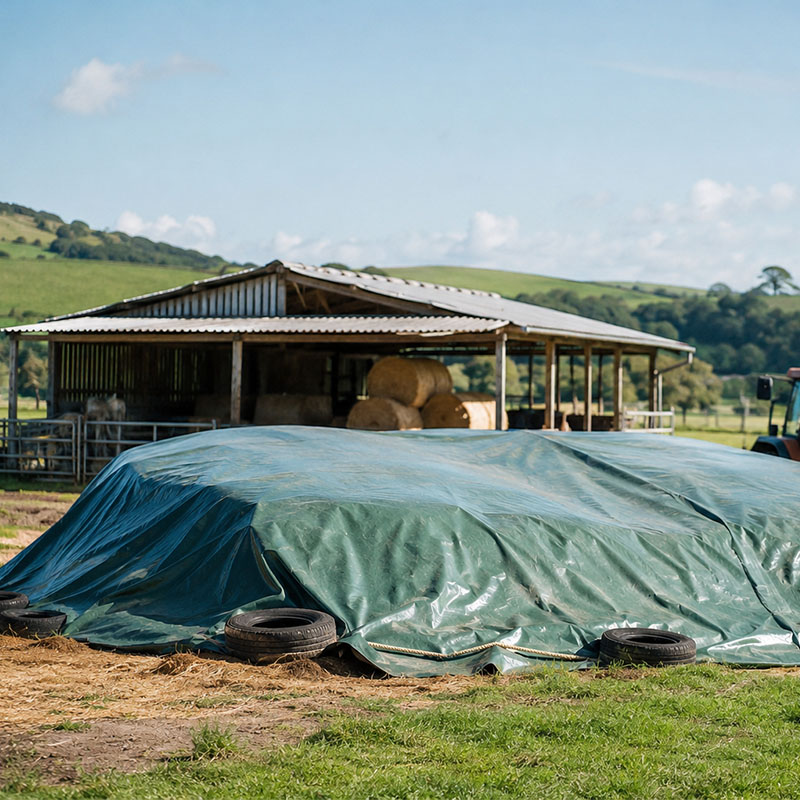
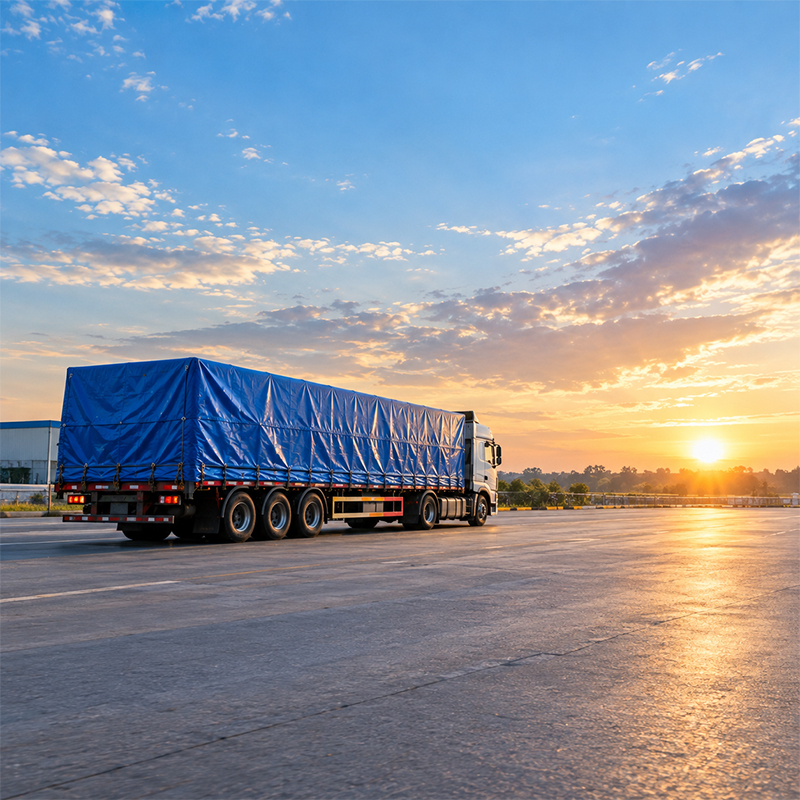
For truck covers and outdoor storage, the strong polyester structure helps resist tearing caused by wind pressure, ropes, corners, and cargo movement. For industrial applications, the PVC surface helps protect the fabric from dirt, moisture, and frequent handling.
Service life depends on the coating formula, product weight, installation method, climate, maintenance, and frequency of use. A correctly specified tarp can normally provide much better long-term value than a low-cost material that needs frequent replacement.
Reliable Waterproof and Weather Protection
PVC knife-coated tarpaulin provides a continuous waterproof surface that helps protect goods, equipment, and working areas from rain and moisture.
The material can also be formulated for resistance to sunlight, cold temperatures, mildew, oil, chemicals, and other environmental conditions. However, these properties are not identical across all products. Buyers should confirm the relevant test standards and technical data before placing an order.
For hot climates, a tarp may need stronger UV resistance and heat stability. For cold regions, low-temperature flexibility is important because poor-quality PVC coatings may become stiff or crack. Coastal and industrial environments may require additional resistance to salt, oil, acids, alkalis, or other chemicals.
Selecting the correct formulation is just as important as choosing the correct fabric weight.
Easy to Clean, Install, and Customize
Despite its heavy-duty construction, 1000D PVC tarpaulin is still flexible enough to fold, roll, transport, and install.
The smooth PVC surface is relatively easy to clean. In many cases, dust and light stains can be removed with water and mild detergent. The material can also be heat-welded to create large covers with waterproof seams.
Reinforced hems, metal grommets, webbing, D-rings, ropes, buckles, and other accessories can be added to improve installation. The material can be produced in different colors, widths, lengths, weights, surface finishes, and performance grades.
This flexibility makes it suitable for truck tarps, machinery covers, storage covers, tents, side curtains, divider curtains, agricultural covers, temporary shelters, and many custom-made products.
Environmental and Safety Options
PVC tarpaulin can be manufactured using different raw material systems to meet specific environmental or safety requirements.
Lead-free formulations, low-odor materials, phthalate-controlled options, flame-retardant grades, and products tested for restricted substances are available from qualified manufacturers. However, compliance should always be confirmed through valid test reports for the exact product being purchased.
RoHS compliance does not automatically mean that a tarpaulin is suitable for direct food contact. In the same way, flame-retardant performance must be verified according to the required standard, such as NFPA 701, DIN 4102-B1, EN 13501, or another market-specific test.
For food storage, agricultural, indoor, or public-area applications, buyers should clearly explain the end use so that the manufacturer can recommend the appropriate formulation and certification.
Why Buyers Continue to Choose 1000D PVC Tarpaulin
1000D PVC knife-coated tarpaulin remains popular because it offers a practical balance of strength, flexibility, waterproofing, and customization.
It is stronger than many lightweight covers, easier to process than rigid protective materials, and adaptable to a wide range of industrial, agricultural, transportation, and outdoor applications.
The best product is not simply the heaviest or most expensive option. Buyers should compare yarn specification, fabric density, finished weight, tensile strength, tear strength, adhesion, temperature resistance, UV performance, flame-retardant requirements, and environmental compliance.
When the material specification is matched correctly to the application, 1000D PVC knife-coated tarpaulin can provide reliable protection, easier installation, and lower long-term replacement costs.
How to Choose the Right Pallet Tarp Cover for Storage and Transportation
Why Is There a MOQ for PVC Tarp?
Related Article