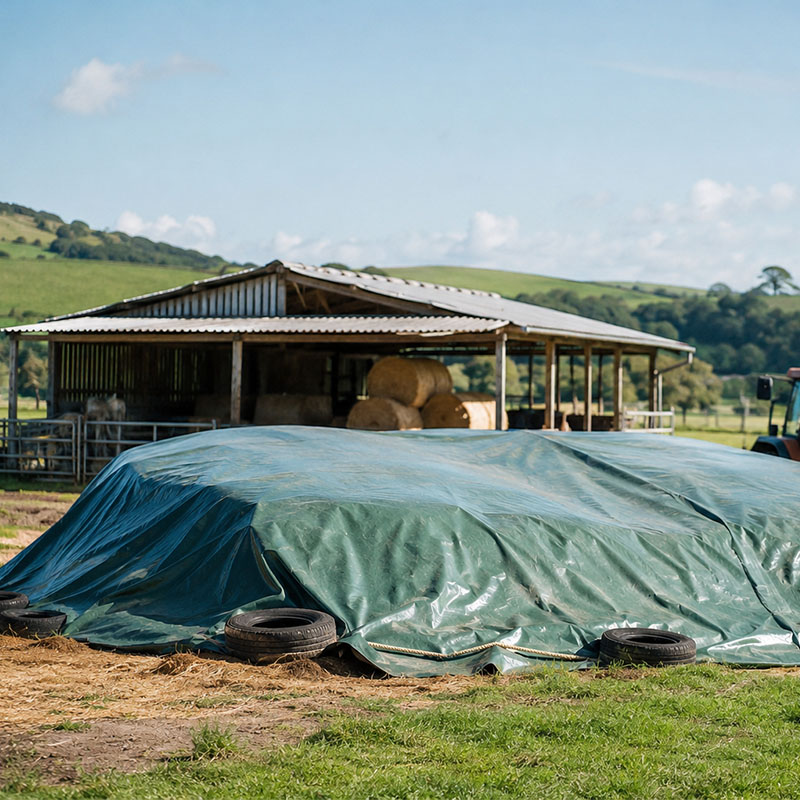
Why Is There a MOQ for PVC Tarp?
Why Is There a MOQ for PVC Tarp?
During the procurement of PVC tarp rolls, many buyers ask the same question: why is the MOQ for PVC tarp usually higher than expected? For buyers who only need a small or medium batch for truck covers, outdoor storage, construction protection, agricultural use, or warehouse covering, the minimum order quantity can sometimes feel like a barrier.
However, the MOQ for PVC knife-coated tarpaulin is not simply an artificial rule set by manufacturers. It is closely related to the way PVC tarpaulin is produced, the cost structure behind each production run, and the supply chain of base fabric, PVC resin, additives, and color materials.
Understanding these factors helps buyers make better purchasing decisions. Instead of only comparing the MOQ number, buyers can evaluate whether to choose stock materials, standard specifications, customized production, or long-term staged purchasing. This article explains why PVC tarp has MOQ requirements and how buyers can plan orders more efficiently.
What Is PVC Knife-Coated Tarpaulin?
PVC knife-coated tarpaulin is an industrial fabric made by coating high-strength polyester base fabric with PVC material. Compared with ordinary temporary covering materials, PVC tarpaulin is designed for better waterproof performance, abrasion resistance, flexibility, tensile strength, and outdoor durability.
It is widely used in:
• Truck covers and trailer curtains
• Outdoor equipment covers
• Construction site protection
• Warehouse and logistics storage
• Agricultural covers
• Industrial partitions and covers
• Inflatable products
• Flexible water tanks
• Large-area outdoor tarpaulin projects
Because PVC tarp is not produced piece by piece like a simple fabric product, its MOQ is usually affected by continuous coating production, raw material supply, color matching, roll width, formulation requirements, and production start-up costs.

1. PVC Tarp Is Produced on Continuous Industrial Coating Lines
The first reason for a higher PVC tarp MOQ is the production method itself.
PVC knife-coated tarpaulin is usually manufactured on a continuous coating line. The process may include base fabric unwinding, PVC paste coating, blade adjustment, heating, gelation, cooling, surface treatment, embossing, trimming, inspection, and rewinding.
This is not a small manual process that can be started and stopped freely. Before production begins, technicians need to adjust several key parameters, such as:
• Coating thickness
• Blade gap and pressure
• Oven temperature
• Production speed
• Fabric tension
• Surface texture
• Color consistency
• Weight and thickness tolerance
Once the line starts running, it needs to remain stable to ensure consistent coating adhesion, surface quality, waterproof performance, and thickness control. If the line is frequently stopped for very small orders, it can reduce production efficiency and increase the risk of uneven coating, color variation, wrinkles, or unstable physical performance.
For this reason, manufacturers usually need a reasonable minimum production volume to keep the coating line operating efficiently and consistently. This is one of the most important reasons why PVC tarpaulin MOQ is higher than many ordinary textile products.

2. Raw Materials Are Supplied in Large Industrial Batches
The second reason comes from the upstream supply chain.
PVC tarp production depends on several types of raw materials, including polyester base fabric, PVC resin, plasticizers, stabilizers, pigments, flame-retardant additives, anti-mildew agents, UV-resistant additives, and other formulation materials.
These materials are not usually purchased in very small quantities. For example, polyester base fabric is commonly supplied in large rolls. PVC resin and additives are often purchased in bags, drums, or bulk packaging. Color pigments and masterbatches also have their own minimum preparation quantities.
This means the tarpaulin manufacturer must also follow the batch requirements of upstream suppliers. If a buyer requests only a very small customized order, the manufacturer may still need to purchase or prepare raw materials in a much larger quantity than the actual order requires.
This supply chain structure directly affects the MOQ of custom PVC tarp rolls. The smaller the order, the harder it is to spread the raw material preparation cost across the final product.

3. Full-Roll Production Determines the Basic Order Unit
PVC tarpaulin is usually produced and supplied in rolls. Common roll widths may vary depending on the factory’s equipment and product series, and roll lengths are often designed for efficient production, storage, transport, and later cutting or fabrication.
For coated fabric, roll integrity is important. During production, the base fabric must run under controlled tension and temperature. The coating layer also needs enough continuous running length to stabilize. Producing only a very short customized length may cause higher waste at the beginning and end of the production run.
In many cases, the practical MOQ is related to the roll width, roll length, fabric type, coating weight, and whether the order uses an existing standard material or a customized specification.
For buyers, this means MOQ is not only a sales policy. It is often linked to the physical production unit of PVC tarpaulin rolls.
4. Start-Up Cost Must Be Spread Across the Order Quantity
Every PVC tarp production run involves fixed start-up costs before stable output is achieved.
These costs may include:
• Equipment preparation
• Heating and temperature stabilization
• Labor for machine adjustment
• Trial coating and quality checking
• Color matching and formulation testing
• Material waste during initial setup
• Cleaning and changeover between different colors or formulas
These costs occur whether the final order is small or large. If the order quantity is too small, the start-up cost per meter becomes very high. As a result, the final unit price may become much higher than buyers expect.
This is why manufacturers usually set MOQ requirements to make production economically practical. A reasonable MOQ helps spread fixed costs across more meters of fabric, keeping the unit price more competitive and stable.
5. Custom Colors and Special Formulas Increase MOQ
Standard PVC tarp materials usually have lower purchasing pressure because manufacturers may keep popular colors and specifications in stock. However, customized requirements often increase MOQ.
Common custom requirements include:
• Specific color matching
• Custom width
• Special weight or thickness
• Flame-retardant performance
• UV resistance
• Anti-mildew treatment
• Cold resistance
• Anti-static performance
• Double-sided coating differences
• Special surface texture or embossing
For example, if a buyer requires a specific Pantone color, the factory may need to prepare a dedicated color paste or pigment formula. If the buyer requires flame-retardant PVC tarp, the production formula may need different additives and additional testing. If the buyer requires a unique surface texture, special embossing rollers or production settings may be needed.
These custom requirements often involve extra preparation, testing, cleaning, and material loss. Therefore, the MOQ for customized PVC tarpaulin is usually higher than standard stock materials.
6. Tooling or Special Surface Requirements May Require Higher Volume
Some PVC tarp products require special tooling or processing, such as embossed surfaces, anti-slip textures, laminated structures, or unique composite designs.
If a buyer needs a customized texture or special pattern, the manufacturer may need to use a specific embossing roller or additional processing equipment. In some cases, new tooling must be developed. This creates additional cost before mass production begins.
Tooling cost cannot be absorbed by a very small order. It must be spread across a larger production volume. Therefore, the more customized the product is, the more likely it is to require a higher MOQ.
This is common in industrial materials. Customization is possible, but the order volume must support the cost of development and production.
7. Quality Consistency Requires Stable Batch Production
PVC tarpaulin is often used in outdoor and industrial environments where performance matters. Buyers usually care about waterproofing, tensile strength, tear resistance, peeling strength, color consistency, flexibility, flame-retardant performance, and service life.
To maintain stable quality, manufacturers prefer to produce each batch under consistent conditions. A stable production batch helps ensure:
• Uniform coating thickness
• Consistent color
• Stable fabric tension
• Better coating adhesion
• Lower defect rate
• More reliable physical performance
• Easier quality inspection and traceability
Very small fragmented orders can increase the difficulty of quality control. From a manufacturing perspective, MOQ helps keep production stable and quality more consistent.
How Can Buyers Reduce MOQ Pressure?
Although MOQ is a real part of PVC tarp production, buyers still have several practical ways to reduce purchasing pressure.
1. Choose Standard Stock PVC Tarp Materials
The easiest way to reduce MOQ pressure is to choose stock or commonly produced specifications.
Manufacturers may keep standard PVC tarp rolls in popular colors, weights, and widths. These materials are often suitable for general waterproof covering, truck covers, warehouse protection, temporary outdoor use, and many industrial applications.
For standard materials, buyers may benefit from:
• Lower MOQ
• Faster delivery
• More stable pricing
• Proven specifications
• Easier sampling
• Less customization cost
If the project does not require a special color or unique technical performance, choosing standard stock material is often the most cost-effective option.
2. Use Regular Colors and Common Specifications
Custom color is one of the common reasons for higher MOQ. If the buyer can accept regular colors such as blue, white, grey, green, black, or other commonly produced shades, the MOQ may be easier to manage.
The same applies to fabric weight and width. Standard weights and widths are usually easier to arrange than unusual custom combinations.
Before confirming a custom order, buyers can ask the manufacturer:
• Do you have similar stock material?
• Is there a regular color close to my requirement?
• Which width has the best production efficiency?
• Which weight is most commonly produced?
• Can my order be arranged with an existing production batch?
This communication can help buyers find a balance between performance, price, MOQ, and delivery time.
3. Plan Annual Demand and Arrange Staged Delivery
For buyers with repeated demand, a better solution is to plan purchasing based on monthly, quarterly, or annual usage.
Instead of placing many small urgent orders, buyers can consolidate demand into a larger production order and negotiate staged delivery with the manufacturer. This approach helps meet MOQ requirements while reducing warehouse pressure.
For example, the buyer may confirm a larger total order quantity but request delivery in several batches according to project progress or inventory capacity.
This method can help buyers achieve:
• Better unit price
• More stable supply
• Lower production risk
• Better inventory planning
• Reduced urgent-order costs
For long-term users of PVC tarpaulin, staged delivery is often more efficient than frequent small orders.
4. Work With Distributors or Consolidated Orders
For buyers who need a small quantity of customized material, working through distributors or consolidated purchasing may be an option.
Distributors can combine demand from multiple customers and place larger orders with the manufacturer. Some manufacturers may also arrange compatible orders together when different buyers need similar colors, formulas, or specifications.
This shared production model can reduce MOQ pressure, especially when the requested material is close to a regular product series.
However, buyers should confirm quality standards, delivery time, and specification consistency clearly before using this approach.
5. Discuss Alternatives Instead of Only Requesting a Lower MOQ
When MOQ seems too high, buyers often ask the factory to simply reduce it. A better approach is to discuss alternatives.
For example, the buyer can ask:
• Is there an existing material close to my specification?
• Can we use a regular color instead of a custom color?
• Can the order be combined with another production batch?
• Can we start with stock material for testing?
• Can future orders use the same formula to reduce setup cost?
• Can you suggest a more economical specification?
Experienced manufacturers can often recommend practical options that reduce cost and improve feasibility without compromising the application.
MOQ Is Not Just a Quantity Rule
MOQ for PVC tarp is not only about how much a factory wants to sell. It reflects the reality of industrial production.
PVC knife-coated tarpaulin requires continuous coating equipment, stable raw material supply, formulation preparation, production setup, quality control, and full-roll handling. These factors all influence the minimum order quantity.
For standard PVC tarp rolls, MOQ may be more flexible. For customized PVC tarpaulin, especially with special colors, flame-retardant requirements, UV resistance, unique widths, or special surface textures, MOQ is usually higher because production preparation and material costs increase.
Understanding this logic helps buyers make better decisions instead of seeing MOQ as a simple obstacle.
FAQ
1. Why is the MOQ for PVC tarp higher than ordinary fabric?
PVC tarp is produced through industrial coating lines, not simple cutting and sewing. Each production run requires equipment setup, material preparation, temperature control, coating adjustment, and quality inspection. These fixed costs make small-batch production less economical.
2. Can I buy PVC tarp below the MOQ?
It depends on the specification. If the manufacturer has stock material, a lower quantity may be possible. If the product requires custom color, special formula, custom width, or special coating, the MOQ is usually harder to reduce.
3. Does custom color increase PVC tarpaulin MOQ?
Yes. Custom color usually requires pigment preparation, color matching, testing, and production cleaning. If the color is not a regular shade, the MOQ may be higher than standard colors.
4. How can I reduce the MOQ for custom PVC tarp?
You can choose standard colors, use common widths and weights, accept similar stock materials, plan long-term demand, arrange staged delivery, or ask whether your order can be combined with a compatible production batch.
5. Is higher MOQ always bad for buyers?
Not necessarily. A reasonable MOQ can help reduce unit cost, improve production stability, and ensure consistent quality. For buyers with long-term demand, larger planned orders are often more cost-effective than repeated small urgent orders.
Conclusion
The MOQ for PVC tarp is shaped by production reality, not simply by manufacturer preference. PVC knife-coated tarpaulin is made through continuous industrial coating, supported by large-batch raw material supply, fixed start-up costs, full-roll production, and strict quality control.
For buyers, the best strategy is not always to push for the lowest possible MOQ. Instead, it is better to match purchasing plans with real application needs. Standard stock materials are suitable for faster and smaller orders. Custom specifications require better planning and larger batch support. Long-term users can reduce cost by forecasting demand and arranging staged delivery.
By understanding why PVC tarp has MOQ and communicating clearly with the manufacturer, buyers can achieve a better balance between product performance, order quantity, delivery time, and total procurement cost.
If you are looking for standard or custom PVC tarpaulin rolls for outdoor covering, truck covers, construction protection, agricultural use, or industrial applications, our team can help recommend a suitable specification based on your usage scenario, target performance, and purchasing plan.
Why Is 1000D PVC Knife-Coated Tarpaulin So Popular?
How to Choose PVC Tarp Rolls: GSM, Thickness & Applications
Related Article