Why Tarp is Waterproof
Why Tarp is Waterproof?
In outdoor protection, logistics transportation, construction, and numerous other scenarios, PVC knife-coated tarpaulins have become the material of choice due to their outstanding waterproof performance. Even when facing torrential downpours or prolonged exposure to damp environments, PVC tarp reliably block rainwater penetration, safeguarding contents from moisture. Unlike ordinary tarps with basic waterproofing treatments, PVC knife-coated tarps derive their water resistance from both the inherent properties of the material and a unique production process. This combination creates a comprehensive waterproof barrier from structure to manufacturing, ensuring more durable and reliable waterproof performance.
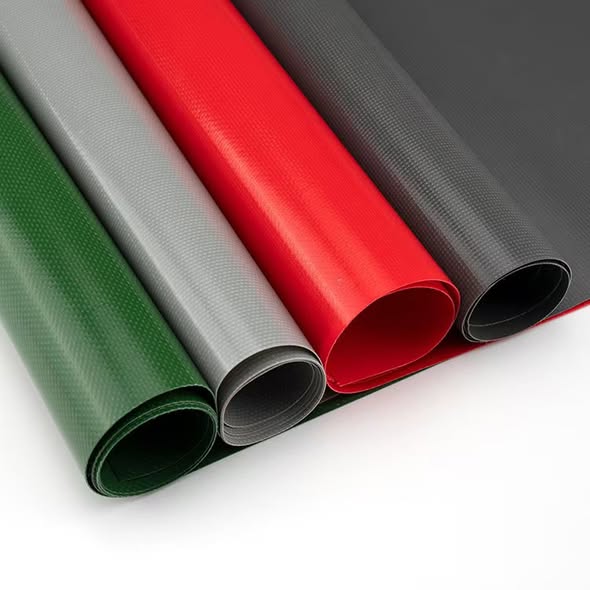
The waterproof foundation of PVC knife-coated tarpaulins lies in the hydrophobic properties of their core material. The coating employs polyvinyl chloride (PVC) resin, a polymer with a densely structured molecular arrangement. This inherently prevents water molecules from penetrating, granting tarp exceptional water-blocking capabilities. During production, PVC resin is processed into a liquid paste, with specialized waterproofing additives incorporated to further enhance the material's hydrophobic properties. This prevents rainwater from bonding with the base material, eliminating water penetration at its source. Additionally, PVC exhibits excellent water resistance. Even with prolonged exposure to water, it does not swell, deform, or rot, consistently maintaining its dense water-blocking structure. This property is a key factor in its long-term, stable waterproof performance.
The unique knife-coating process is the core key to achieving high-efficiency waterproofing in PVC knife-coated tarpaulins. Unlike the spray coating or dip coating processes used for ordinary tarpaulins, knife-coated tarpaulins employ specialized knife-coating machines. These machines evenly apply liquid PVC coating onto the surface of high-strength fiber substrates using scrapers. This process can also achieve double-sided, multi-layer coating, forming a dense waterproof layer with uniform thickness, free of pinholes and bubbles. This process ensures exceptional adhesion between the PVC coating and the substrate, preventing issues like coating peeling or lifting. It eliminates potential leakage points caused by coating damage. Premium knife-coated PVC tarpaulins undergo 6-7 layers of PVC coating, achieving water pressure resistance exceeding 3000mm water column. Even under torrential rain, the tarpaulin structure remains impervious to water penetration despite intense hydrostatic pressure. Additionally, the smooth coating surface created by the knife-scraping process achieves a lotus-leaf-like water-repellent effect. Rainwater that lands on the surface quickly coalesces into droplets and rolls off, preventing water accumulation on the tarpaulin surface and reducing the possibility of water penetration.
The high-strength fiber substrate and specialized weave structure provide robust structural support for the waterproof properties of PVC knife-coated tarpaulins. The substrate commonly employs high-density polyester or polyamide fibers, which inherently exhibit low water absorption. This prevents structural weakening due to moisture uptake and avoids tarpaulin damage caused by substrate dampness and mold growth. Employing a dual-axis warp-knitted construction, the warp and weft fibers are densely arranged with no discernible gaps. Combined with the PVC coating's full coverage, this prevents water molecules from penetrating. Moreover, this weave structure exhibits exceptional tensile strength and tear resistance. The tensile strength in the warp direction exceeds 3000N/5cm, enabling it to withstand external forces such as strong winds and impacts, preventing leaks caused by fabric damage. Even with prolonged use, the fabric remains resistant to tearing and damage, structurally ensuring the integrity of the waterproof layer.
Precision splicing and processing techniques enable PVC knife-coated tarpaulins to achieve seamless waterproofing throughout, completely eliminating potential leaks at seams. While conventional tarpaulins typically rely on needle stitching—where needle holes become natural leakage points—PVC knife-coated tarpaulins employ thermal bonding. This process fuses the seams together at high temperatures, creating a seamless structural connection. This process ensures the waterproof performance at the seams matches the main body of the tarp, preventing rainwater penetration through the joints. Additionally, the edges of the tarp undergo reinforced binding treatment, with the corners secured using rubber or metal fittings. This prevents edge wear and cracking, further guaranteeing the overall waterproof integrity.
Additionally, PVC knife-coated tarpaulins maintain their waterproof properties over extended periods in demanding environments, thanks to the exceptional weather resistance and anti-aging properties. During PVC coating production, UV stabilizers, antioxidants, and anti-fungal agents are incorporated. This allows the tarpaulin to withstand prolonged exposure to harsh conditions like sunlight, rain, and wind-blown sand without experiencing coating degradation, cracking, or chalking. PVC tarp adapts to extreme temperatures ranging from -20°C to 70°C, resisting brittleness at low temperatures and deformation at high temperatures while maintaining a dense, waterproof layer structure. Additionally, the inclusion of mold inhibitors effectively suppresses the growth of fungi and algae, preventing microbial damage to both the coating and substrate. This ensures the tarpaulin maintains its waterproof performance even in humid outdoor conditions, with a service life extending up to 8-10 years.
The exceptional waterproof performance of PVC knife-coated tarpaulins stems from the perfect integration of material science and advanced manufacturing techniques. From the hydrophobic PVC coating to the dense knife-coating process, and further to the robust base material structure and seamless splicing treatment, every aspect is meticulously engineered for waterproofing. This is precisely why PVC knife-coated tarpaulins deliver consistent waterproofing performance across diverse outdoor applications, becoming indispensable protective materials in logistics, construction, agriculture, and aquaculture. With continuous advancements in production technology, the waterproofing capabilities of PVC knife-coated tarpaulins continue to improve while also incorporating properties such as abrasion resistance, flame retardancy, and environmental sustainability. In the future, PVC tarpaulin will demonstrate unique application value across even more fields.
What Is The Difference Between PE Tarp And PVC Tarp
What Are Tarps Made Of
Related Article